Caring for ECMO Cannula Sites: Insights from the ELSO Red Book and ECMO Specialist Training Manual
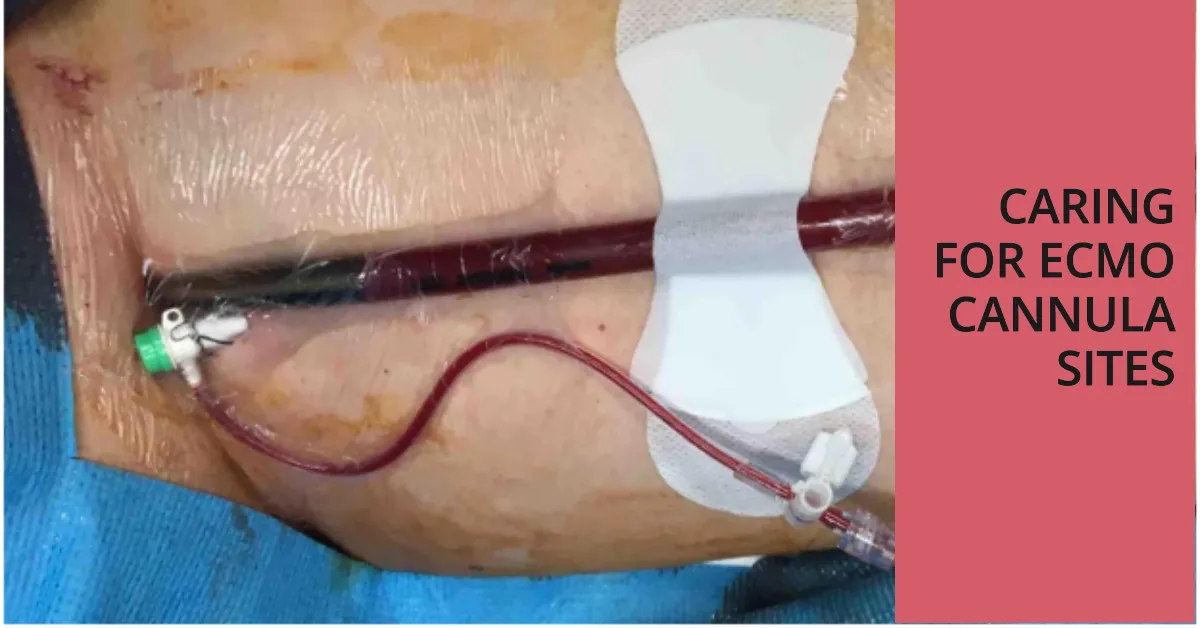
ECMO (Extracorporeal Membrane Oxygenation) cannula sites require meticulous attention due to their critical nature and the heightened risk of infection. The ELSO Red Book 6th edition highlights the importance of managing these sites meticulously, especially in adult patients who face increased risks of pressure ulcers and infections. While specific dressing protocols for adult ECMO cannula sites are limited, ELSO emphasizes the need for comprehensive skin and cannula site management to minimize risks.
Key Points from ELSO Red Book 6th Edition
-
Increased Pressure Ulcer Risk: Adults in cardiogenic shock often experience cutaneous hypoperfusion, making them more susceptible to deep cutaneous ulcers. Hemodynamic instability can hinder frequent repositioning, further increasing this risk.
-
High Infection Rates: There is a significant infection risk associated with percutaneous cannulation sites in adults undergoing ECMO. While cannulas are less likely to be infected than indwelling central lines, the exact incidence of infections remains unclear due to the lack of standardized definitions.
Recommendations for Managing ECMO Cannula Sites
For Adult Patients
ELSO suggests a comprehensive approach to minimize infection and pressure ulcer risks:
-
Bundled Cannula Insertion Plan: Implement full sterile barrier precautions and a defined dressing method during insertion.
-
Daily Chlorhexidine Baths: Use chlorhexidine baths for skin decontamination.
-
Frequent Dressing Changes: Change dressings at least daily or more often, depending on exudate.
-
Transparent Dressings: Utilize transparent semipermeable dressings to allow visual inspection of the site for bleeding, erythema, purulence, securement, and cannula migration.
-
Consideration of Chlorhexidine-Impregnated Dressings: Although evidence is limited, these dressings may offer additional infection control.
-
Pressure Ulcer Prevention: To alleviate pressure, use hydrocolloid or foam pads under the cannula. Hydrocolloid pads with cannula attachment devices can provide secure fixation and minimize skin injury.
For Pediatric Patients
According to the ELSO ECMO Specialist Training Manual 4th edition, maintaining a clean and secure cannula site is crucial for all ECMO patients, with additional considerations for pediatric patients due to their vulnerability:
Immature Immune Systems: Neonates on ECMO are particularly susceptible to infections.
-
Anticoagulation Therapy: The use of anticoagulants increases the risk of bleeding complications.
-
Immobility: The severity of their condition often necessitates prolonged immobility.
Recommendations for Pediatric Patients:
-
Assessing Cannula Sites: Nurses should routinely evaluate cannula sites for dressing integrity, bleeding, catheter position, and skin condition.
-
Site Cleaning: Clean the cannula and incision site with CHG swabs or pads, betadine, or sterile saline wipes.
-
Dressing Selection: Use dry dressings, including gauze, transparent film dressings (for dry, non-exudative sites), or foam dressings (for at-risk sites or existing pressure ulcers).
-
Dressing Securement: Secure dressings with tape, considering the patient’s sensitivity to tape.
-
Addressing Dressing Challenges: Pay special attention to cannula sites in difficult areas such as the neck or groin, especially in pediatric patients.
Preventative Measures for Pressure Ulcer Risks:
-
Regular Turning: Reposition the patient every two hours to relieve pressure.
-
Positioning Aids: Use fluidized positioners for extremities, head, and shoulders, especially when regular turning is difficult due to cannula positioning.
-
Specialty Mattresses: Employ pressure-reducing mattresses or overlays.
Clinical Guidelines for Dressing Changes
-
Transparent Film Dressings: Typically changed every 5-7 days or sooner if they become soiled or loose.
-
Foam and Hydrofiber Dressings: Changed based on the level of exudate and the specific product’s guidelines, usually every 3-7 days.
-
Antimicrobial Dressings: Depending on the type, these can often remain in place for up to 7 days but should be assessed regularly for signs of infection or saturation.
By following these guidelines and selecting the appropriate dressing type, healthcare providers can help reduce the risk of infection and ensure the optimal care of ECMO cannula sites.
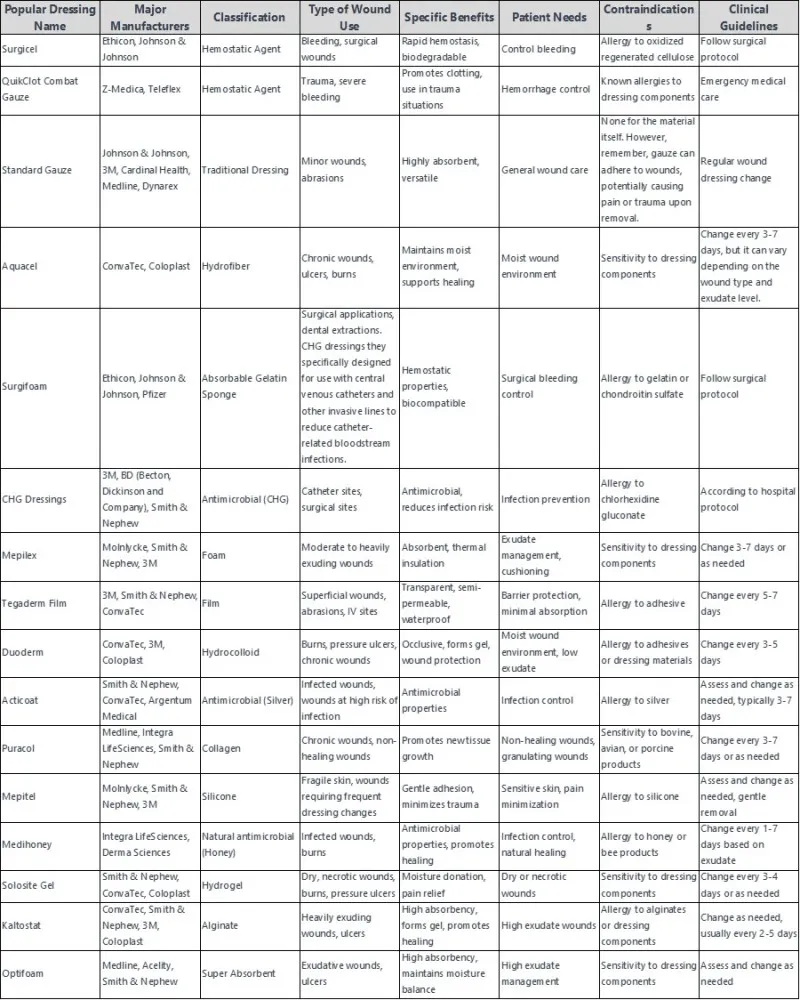
Comprehensive Overview of Popular Wound Dressings
Conclusion
This chart outlines a range of popular wound dressings, providing essential information for healthcare professionals to make informed decisions when selecting dressings for different types of wounds. Each dressing is listed with its major manufacturers, classification, specific uses, benefits, patient needs, contraindications, and clinical guidelines. This comprehensive overview helps ensure that the right dressing is chosen to promote optimal wound healing, manage exudate, prevent infection, and meet individual patient requirements. The selection of dressings should always be guided by clinical assessment and institutional protocols to achieve the best patient outcomes.
References
-
Extracorporeal Life Support: The ELSO Red Book, 6th Edition. Published by the Extracorporeal Life Support Organization (ELSO), this comprehensive text is a key resource for understanding the principles and practices of ECMO.
-
ECMO Specialist Training Manual, 4th Edition. This manual provides in-depth training protocols and guidelines for ECMO specialists, covering cannulation techniques, patient management, and emergency procedures.
-
Various Other Source Materials. Additional insights and guidelines on ECMO practice, including hospital patient care practices.
Note: This article is based on information sourced from the ELSO Red Book (6th Edition) and the ECMO Specialist Training Manual (4th Edition). It has not been reviewed or officially endorsed by ELSO. This article reflects my learning journey in ECMO and is intended for educational purposes only. It should not be used as a substitute for professional medical advice or guidance. Always consult with qualified healthcare professionals for clinical decisions and patient care.
Share and Subscribe. Join the ECMO 143 Learning Journey:
Other Links:
Follow me on LinkedIn: Jonathan B. Jung, RRT-NPS
Follow me on X (Twitter) “ECMO 143-Stay Uptodate” List on X
Acknowledgments:
I developed three custom GPTs, “AI ECMO Expert,” “ECMO Specialist Handover Practice,” and “Micro Definitions (MD-GPT),” for specialized research. These tools draw primarily from the ELSO Redbook (6th Edition), the ELSO Specialist Training Manual (4th Edition), various research papers, and articles. Additional research was supported by GPT-4o/o1, Claude 3.5 Sonnet/Opus, and Perplexity. Editing was performed with Grammarly. A.I. images and charts were created using Leonardo AI, DALL-E3 AI Image Generator, Microsoft Designer, and Adobe Express. Content for all articles sourced from Extracorporeal Life Support: The ELSO Red Book, 6th Edition, and ECMO Specialist Training Manual, 4th Edition.