Hidden Hyperoxia—A Silent Threat
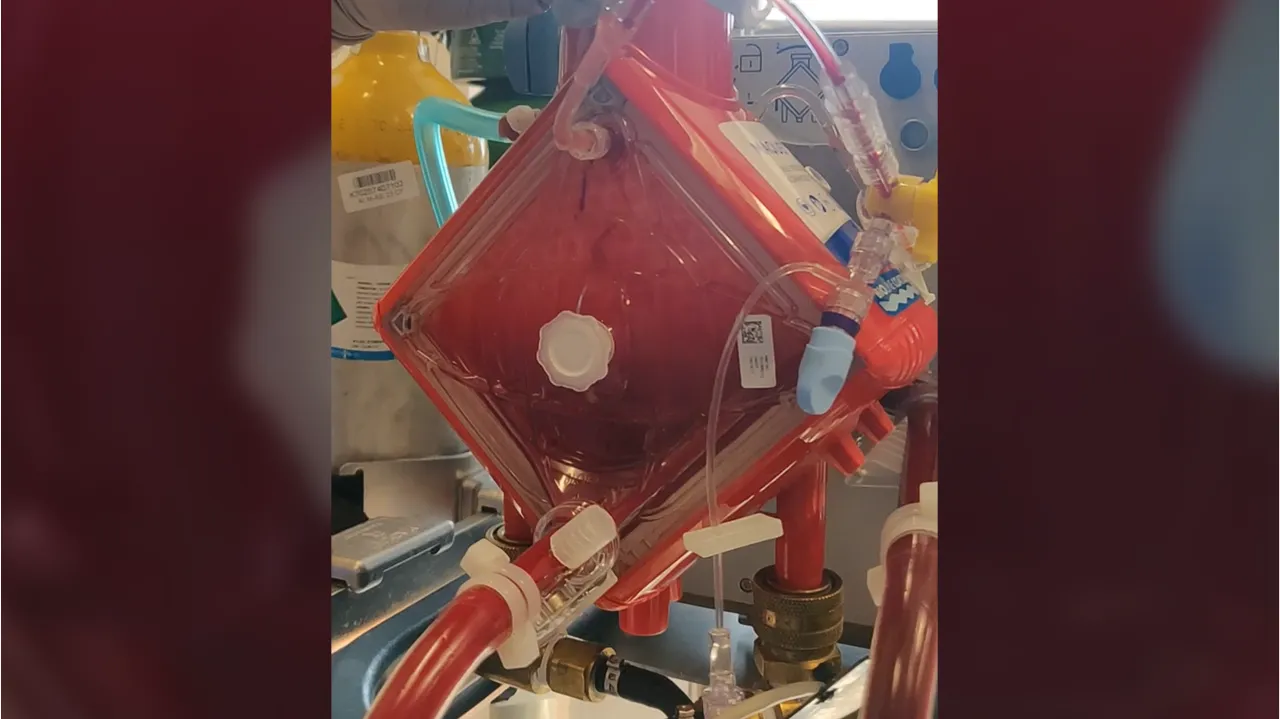
When managing patients on venoarterial ECMO (VA-ECMO), we often focus on familiar complications like Harlequin syndrome, also know as differential hypoxia. While these are very important, there is another equally noteworthy issue that needs attention: hyperoxia in the lower body.
In my experience, I didn’t fully grasp the importance of post-oxygenator blood gases until I encountered a specific case. I drew an arterial blood gas (ABG) on a patient whose right radial ABG showed normal results, with good SpO2 and SvO2 readings. However, the post-oxygenator ABG revealed a pO2 over 300 mm Hg. As a former respiratory therapist, I was already aware of the risks of oxygen toxicity and the damage it can cause. This prompted me to think more carefully about where this hyperoxic blood was traveling in a patient with peripherally cannulated VA-ECMO.
After going through the research, I was surprised by the number of studies pointing out the negative effects of hyperoxia on various organs. These studies showed that hyperoxia doesn’t just affect the lungs and brain; it can also have serious consequences for the gut and lower extremities. One study indicated that hyperoxia could contribute to lower limb ischemia in certain patients.
This observation aligns with the findings of the recent review article,“Oxygenation During Venoarterial Extracorporeal Membrane Oxygenation: Physiology, Current Evidence, and a Pragmatic Approach to Oxygen Titration.” The article provides a detailed look at managing oxygenation in VA-ECMO patients, focusing on three main points:
Key Factors Influencing Oxygenation:
It explores how both ECMO circuit and patient-specific factors impact systemic oxygenation, including ECMO blood flow and interactions with native cardiac output and respiratory function.
Impact of Hyperoxia on Patient Outcomes:
Hyperoxia, typically defined as a PaO2 above 150 mm Hg, is common in VA-ECMO patients, with some studies indicating that up to 30% of patients experience severe hyperoxia (PaO2 > 300 mm Hg). While ECMO is meant to provide essential oxygenation support, high oxygen levels can have negative effects. The article outlines several important findings:
Increased Mortality Risk: Hyperoxia has been closely linked with higher in-hospital death rates in both VA-ECMO and extracorporeal cardiopulmonary resuscitation (ECPR) patients. This link remains even after adjusting for the severity of the underlying condition. Severe hyperoxia (PaO2 > 300 mm Hg) presents a greater danger than mild hyperoxia, highlighting the need for careful oversight.
-
Neurological Damage: Patients on VA-ECMO who are exposed to elevated oxygen levels can suffer neurological damage due to oxidative stress on brain tissues. Hyperoxia can worsen reperfusion injury, leading to poor neurological outcomes. Research has shown that patients with higher average PaO2 levels during the first 24 hours on ECMO often have worse neurological recovery and higher rates of acute brain injury.
-
Exacerbation of Reperfusion Injury: In patients with severe ischemia-reperfusion injury, such as those recovering from cardiac arrest, hyperoxia can make the injury worse. This is due to the increased production of reactive oxygen species (ROS), which can harm cell structures and slow recovery. The oxidative stress caused by high PaO2 levels can also aggravate inflammation, which can further affect patient outcomes.
-
Pulmonary and Body-Wide Inflammation: The review also covers how hyperoxia can make lung injury worse, especially in patients with conditions like acute respiratory distress syndrome (ARDS). It can lead to higher neutrophil activation in the lungs, causing more inflammation and complicating respiratory management. Additionally, hyperoxia can aggravate inflammation throughout the body in patients with underlying conditions such as sepsis or ARDS, leading to additional complications.
-
Impact on Organs and Lower Extremities: The article explains that hyperoxic blood flow, particularly in cases of peripheral cannulation, can have localized effects on organs such as the gut and lower limbs. The high oxygen levels can lead to conditions like gut ischemia and, in some cases, lower limb ischemia. This is especially concerning in patients with poor cardiac output, where retrograde ECMO flow can direct hyperoxic blood into the lower body, subjecting these tissues to harmful oxygen levels.
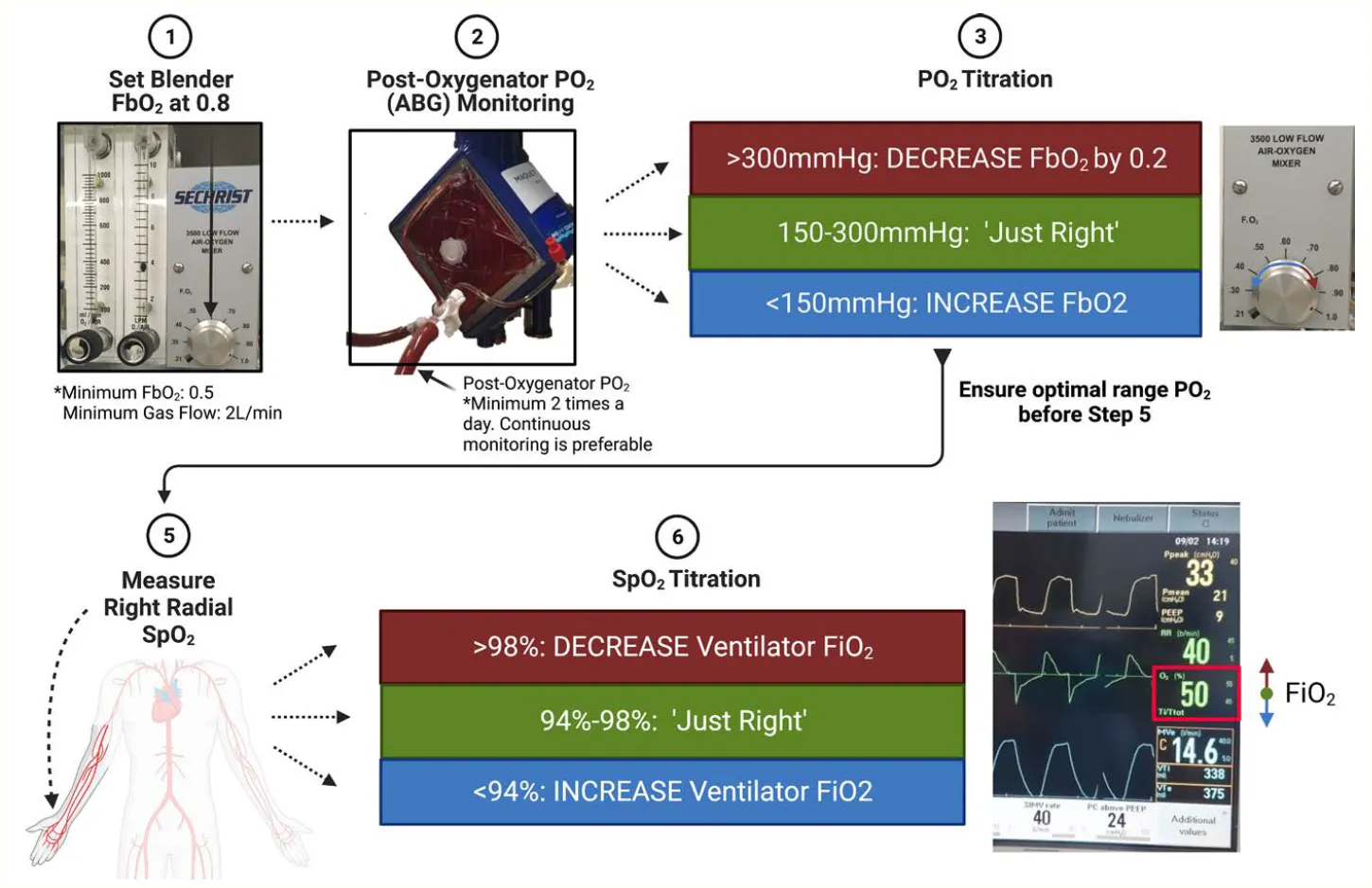
From ‘Oxygenation During Venoarterial Extracorporeal Membrane Oxygenation: Physiology, Current Evidence, and a Pragmatic Approach to Oxygen Titration’
Practical Approach to Oxygen Titration:
The article describes a balanced method to avoid severe hyperoxia while preventing hypoxia. This includes several important strategies:
-
Targeting Specific Oxygen Levels: The review advises targeting post-oxygenator PaO2 values between 150-300 mm Hg, which maintains a balance between avoiding the risks of severe hyperoxia and preventing hypoxia. It also suggests keeping right radial oxygen saturation between 94-98% as a practical range for overall oxygenation.
-
Using an Air-Oxygen Blender: Adding an air-oxygen blender into the ECMO circuit allows for precise adjustments of the oxygen concentration delivered to the membrane oxygenator. This device enables clinicians to fine-tune the fraction of inspired oxygen (FiO2), making sure that post-oxygenator PaO2 levels stay within the suggested range.
-
Continuous Monitoring: Given the changing nature of ECMO patients’ physiology, consistent monitoring of post-oxygenator blood gases is essential. The article points out that variations in the patient’s native cardiac output or the ECMO circuit function can change oxygenation levels, making it necessary to adjust settings without delay. While post-oxygenator measurements are often not standard in all ECMO setups, they provide important information about the oxygen levels reaching the patient.
-
Balancing Risks: The article highlights the aim of avoiding extreme hyperoxia while ensuring a safety margin against possible hypoxia. This method is especially important for patients with complex conditions, such as those recovering from cardiac arrest or severe respiratory failure. Although future randomized trials may offer more specific guidelines, the current advice is to avoid PaO2 values above 300 mm Hg and follow a careful approach to oxygen adjustment.
The challenge of managing oxygen levels in VA-ECMO is significant. While addressing differential hypoxia is crucial, we must not ignore the dangers of hyperoxia, especially concerning the lower body. Managing these challenges requires careful adjustments—ensuring that patients receive enough oxygen to prevent hypoxia without reaching dangerous levels of hyperoxia.
As ECMO specialists, our ongoing learning means understanding these subtleties and adjusting our practice to deliver the best care. Have you encountered cases where managing hyperoxia was a challenge? Please share your experiences, and let’s continue this important conversation.
Reference:
Premraj, L., Brown, A., Fraser, J. F., Pellegrino, V., Pilcher, D., & Burrell, A. (2023). Oxygenation during venoarterial extracorporeal membrane oxygenation: Physiology, current evidence, and a pragmatic approach to oxygen titration. Critical Care Medicine. https://doi.org/10.1097/CCM.0000000000006134
Join the ECMO 143 Learning Journey
Note: This article reflects my learning journey in ECMO and is intended for educational purposes only. It should not be used as a substitute for professional medical advice or guidance. Always consult with qualified healthcare professionals for clinical decisions and patient care.
Other Links:
-
Follow me on LinkedIn: Jonathan B. Jung, RRT-NPS
-
Stay updated on X (Twitter): Follow the “ECMO 143 - Stay Up to Date” List
-
Check out my Week in Review Podcast on YouTube: ECMO 143
-
Join the discussion on Facebook: ECMO 143 Facebook Group
Acknowledgments:
Here is a list of tools and resources that assisted in creating this article and others. To assist in specialized research, I developed three custom GPTs—AI ECMO Expert, ECMO Specialist Handover Practice, and Micro Definitions (MD-GPT). These tools were instrumental in gathering and analyzing information from key sources.
Special thanks to the AI platforms and tools that facilitated this research:
-
GPT-4o/o1, Claude 3.5 Sonnet/Opus, Perplexity
-
Grammarly for editorial and proofreading assistance
-
Leonardo AI, DALL-E3 AI Image Generator, Microsoft Designer, and Adobe Express for generating images and visual content