💡 Light-Bulb Moment 💡in VV ECMO Management

Small adjustments in ECMO lead to learning moments. A recent VV ECMO case highlights the balance between ECMO flow, shunt fraction, and sweep gas settings, demonstrating a simple VV ECMO principle.
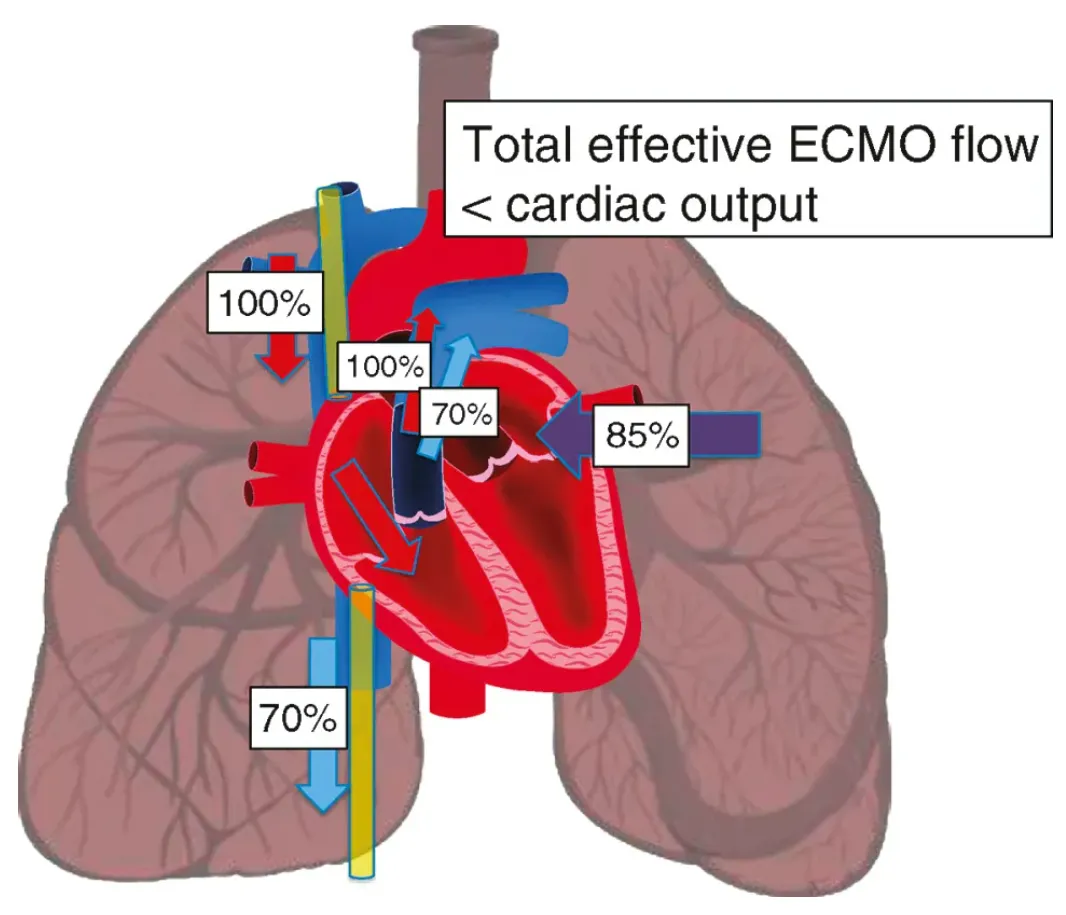
Figure 1: Diagram of VV ECMO flow dynamics. Image Source: Adapted from Veno-Venous ECMO Physiology, Aneskey.com
Case Study
The scenario involves a patient fully dependent on VV ECMO due to non-functional lungs. ECMO flow starts at 4.1 LPM, with the sweep set to 6 LPM and FdO2 at 100%. SpO2 stays in the low 90s and acceptable blood gases. The patient’s beta blockers had to be discontinued due to unexpected cardiac side effects. Over several ABGs, the sweep gas needs to be increased due to rising pCO2. Eventually, the sweep is at 8.5 LPM for a pCO2 of 43 and pH of 7.42. The SpO2 is in the mid-80s, while SvO2 remains in the 60s. The patient experiences occasional desaturations with slow recovery. The pulse pressure is fantastic.
A Light-Bulb Moment
During rounds, the ECMO flow is increased from 4.5 LPM to 5.2 LPM to 6 LPM. The impact is immediate and seen in several areas. As expected, the SpO2 increases and stabilizes above 93%, recovery from desaturation quickens, and, to my surprise, the sweep gas requirements significantly decrease from 8.5 LPM to 6.5 LPM for a normocarbic ABG.
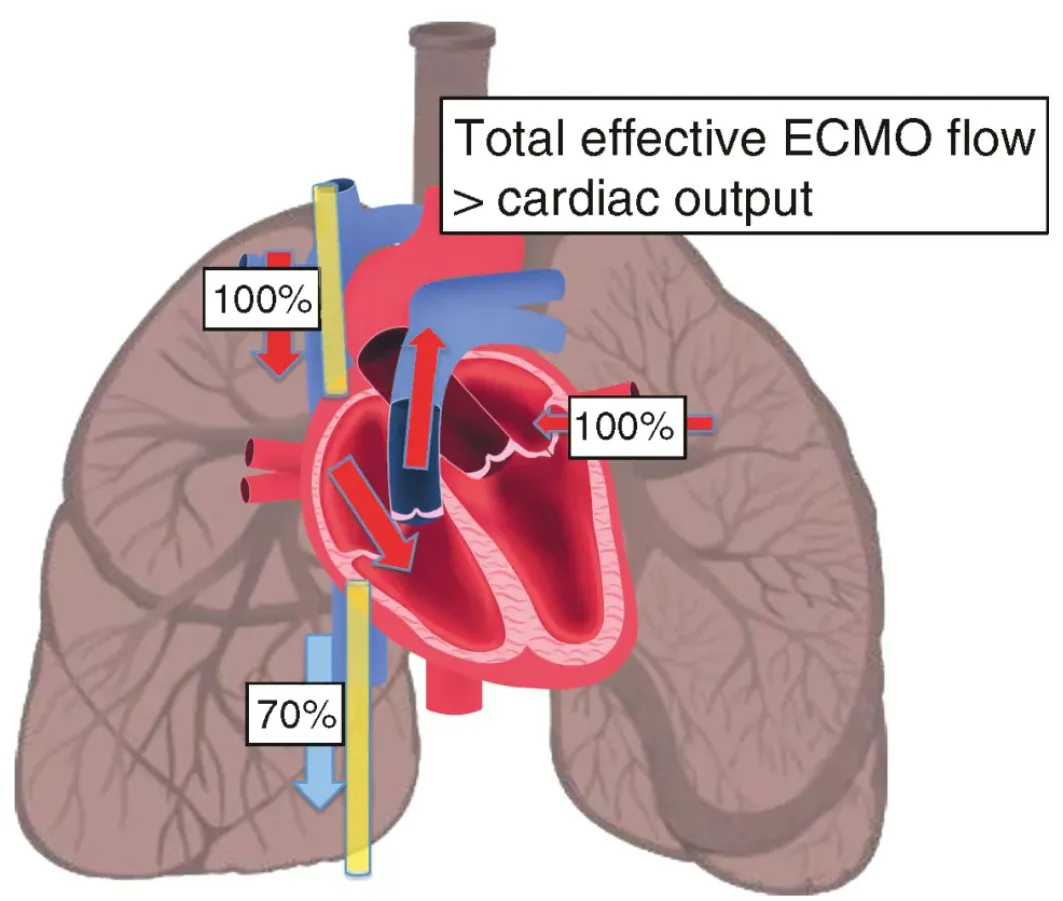
Figure 2: Diagram of VV ECMO flow dynamics. Image Source: Adapted from Veno-Venous ECMO Physiology, Aneskey.com
After thinking about what had just occurred, a light-bulb comes on!💡Taking the patient off the beta blockers increased the heart rate, increasing the Cardiac Output. The initial ECMO flow was insufficient to supply the new cardiac output flow with blood from the ECMO machine, so the heart was entraining venous blood to make up the difference. The shunt fraction had increased. This, in turn, decreased the total blood saturation and increased the pCO2. Increasing the ECMO flow to match cardiac output allows more ECMO blood and less venous blood to be entrained. By increasing the ecmo flow, the shunt fraction was decreased. The decreased shunt fraction directly reduces the burden on the ECMO sweep gas setting, which can now be lowered. For me, this is the ‘aha’ moment where everything clicks. It highlights how understanding and fine-tuning ECMO parameters leads to better patient outcomes.
Key Principle: ECMO Flow and Shunt Fraction
The principle is straightforward yet profound: The more blood from the ECMO circuit that enters cardiac output, the better the oxygenation and ventilation.
Breaking Down the Concepts
-
Shunt Fraction: refers to the percentage of blood bypassing the oxygenator without undergoing gas exchange. A high shunt fraction occurs when ECMO flow is too low relative to cardiac output, meaning a significant portion of blood bypasses the circuit, contributing to poor oxygenation and an increased CO2 burden.
-
Optimizing Flow: Increasing ECMO flow raises the proportion of oxygenated blood entering the systemic circulation. This reduces the shunt fraction, improves gas exchange efficiency, stabilizes SpO2, and lowers reliance on high sweep gas flows. However, there are limiting factors to increasing ECMO flow, such as elevated circuit pressures, risks of suckdowns, or concerns about hemolysis. These must be balanced carefully against the need to reduce the shunt fraction and optimize oxygenation.
-
Recirculation Risks: When ECMO flow exceeds cardiac output, SvO2 may climb significantly from baseline, indicating recirculation. In such cases, some oxygenated blood re-enters the ECMO circuit rather than contributing to systemic circulation, reducing efficiency.
Lessons Learned in Practice
This case offers several valuable lessons:
-
Optimize Flow: Matching ECMO flow to cardiac output minimizes the shunt fraction, improving oxygenation and CO2 removal.
-
Adjust Sweep Gas: 💡As the shunt fraction decreases, sweep gas demands can be reduced, leading to a more stable and efficient circuit. This is my light-bulb moment—seeing this happen makes everything click.
-
Monitor Recirculation: Watch for signs of excessive ECMO flow, such as rising SvO2, which may indicate increased recirculation.
-
Management: Continuously evaluate and adapt ECMO settings to meet the patient’s needs. This could be due to a change in medication or dosing, the heart or lungs getting sicker or healthier, hemodynamics, volume status, or patient positioning.
Conclusion
The relationship between VV ECMO flow, cardiac output, and shunt fraction provides important insights into patient management. Based on careful observation and understanding, even minor adjustments can significantly improve patient outcomes. This case illustrates the importance of thoughtful, involved ECMO management and is a valuable learning experience for clinicians.
Join the ECMO 143 Learning Journey:
Enjoy this? Please subscribe to my free Newsletter,
Note: This article reflects my learning journey in ECMO and is intended for educational purposes only. It should not be used as a substitute for professional medical advice or guidance. Always consult with qualified healthcare professionals for clinical decisions and patient care.
Other Links:
https://bit.ly/ecmo143-newsletter
https://bit.ly/ecmo143-youtube
https://bit.ly/ecmo143-company
Acknowledgments:
Here is a list of tools and resources that assisted in creating this article and others. I developed three custom GPTs for specialized research:
-
OpenEvidence (Daniel Nadler and Zachary Ziegler, OpenEvidence)
-
GPT-4o/o1, Claude 3.5 Sonnet/Opus, Perplexity, Gemini 1.5 Flash
-
Grammarly for editorial and proofreading assistance (can’t live without it)
-
Leonardo AI, DALL-E3 AI Image Generator, Microsoft Designer, and Adobe Express for generating images and visual content