Optimizing ECMO Training: Key Strategies for Success from a Student's POV
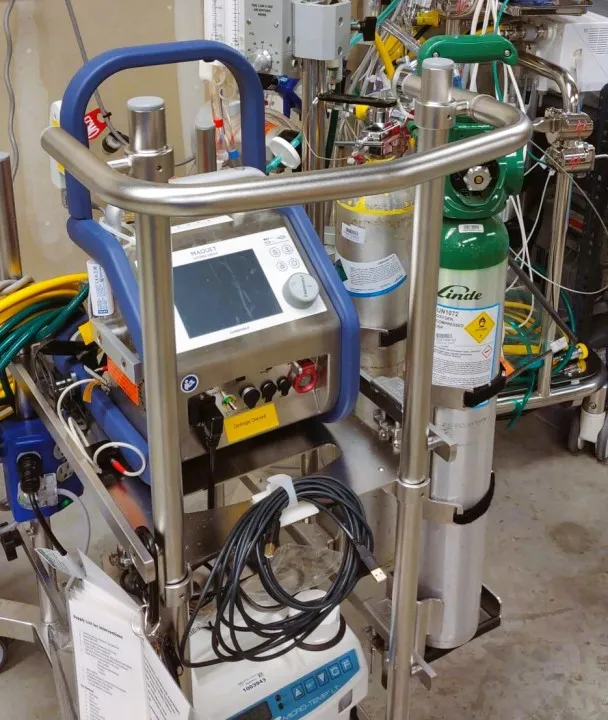
As a past training center director and coordinator, I have gained valuable insights into the importance of effective communication, adaptability, and creating a supportive learning environment for trainees. These experiences have shaped my understanding of trainers’ critical role in their trainees’ professional development. Recently, I experienced this role reversal, becoming an Extracorporeal Membrane Oxygenation (ECMO) trainee at a hospital with a well-established ECMO program. Here are the lessons I would like to share.
Foundational Training with a Single Preceptor
One of the main aspects I learned as a trainee was the importance of having a solid foundation with a single preceptor before transitioning to multiple preceptors. Meeting several preceptors at the outset often leads to repeated instructions and training due to a lack of comprehensive understanding of the trainee’s prior learning. Establishing a strong foundation with one preceptor ensures consistency and reduces unnecessary repetition.
Implementing Diverse Learning Methods
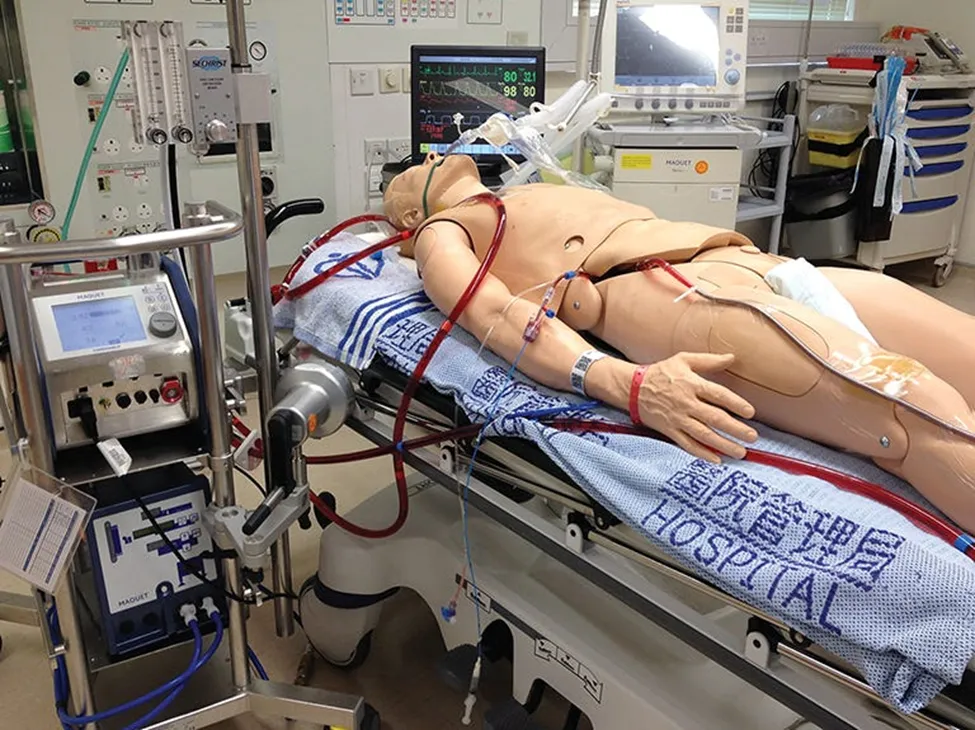
Simulations – More, More, and Even More!
-
Benefits: Realistic practice, safe learning environment, immediate feedback
-
Strategies: Regularly incorporate simulations, debrief after each session, and have simulation equipment available for independent practice.
-
Simulations can be effective training tools if well-organized. Assigning roles and rotating team leaders during scenarios ensures all trainees engage and learn. Structured simulations with defined roles better teach tasks and problem-solving, reducing anxiety and frustration.
Bedside Work
-
Benefits: Hands-on experience, real-time problem-solving, teamwork
-
Strategies: Pair trainees with experienced staff who enjoy training, adhere to institutional guidelines, and understand the rationale behind their actions.
Didactic Work and Testing
-
Benefits: Formal knowledge acquisition, assessment of progress
-
Strategies: Allocate dedicated time and use varied teaching materials. Enhance self-teaching modules, which should have notes or audio tracks and monitor progress with tests.
Flexibility and Continuity in Preceptor Assignments
Early Preceptor Changes
- Encourage trainees to change preceptors if learning styles clash. The trainee should never be mentioned as the reason for switching preceptors.
Establishing a Foundation - important
-
Pair trainee with the same preceptor until learning goals are achieved. This may mean putting the trainee and preceptor on the same schedule.
-
Ensure hospital geography and the ECMO foundation are learned before switching preceptors.
Expanding Knowledge and Skills
- Allow the trainees to occasionally work with a non-primary preceptor only after establishing a strong foundation.
Participatory Orientation
-
The preceptor and trainee collaborate in the orientation learning process.
-
Address individual learning needs and preferences.

Unproductive Preceptor Conduct
Public Questioning and Demanding Immediate Answers:
- An ineffective preceptor questions the trainee in front of peers, creating pressure and an uncomfortable environment.
Invasion of Personal Space and Intimidation:
- Disrespectful behavior, such as invading personal space and using aggressive body language, undermines confidence and hampers learning.
Undermining and Discrediting the Orientee:
- Disregarding the trainee’s abilities and knowledge in front of peers erodes self-esteem and damages professional reputation.
Failure to Provide Constructive Feedback:
- Focusing solely on mistakes without offering guidance hinders professional development and contributes to a negative mindset.
Preceptor and Trainee Interaction: A two-way effort
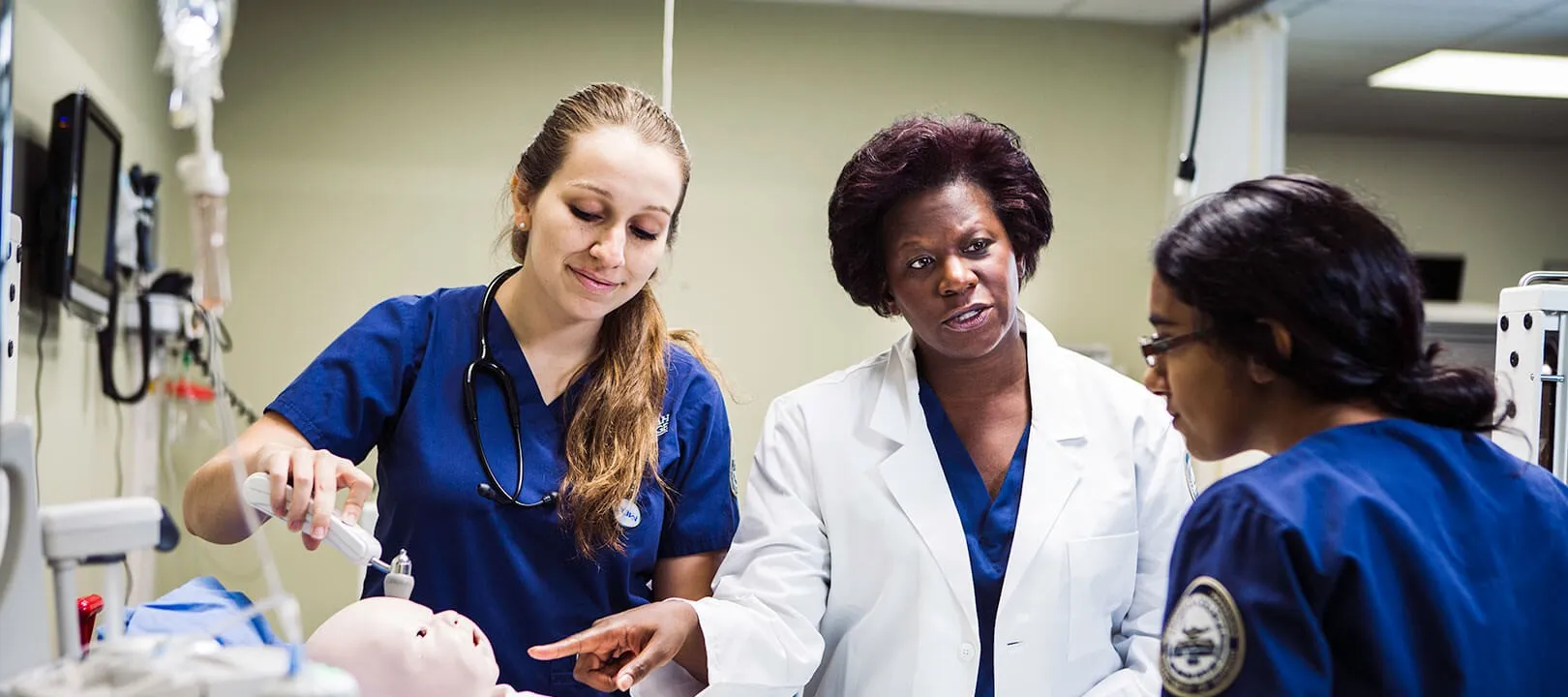
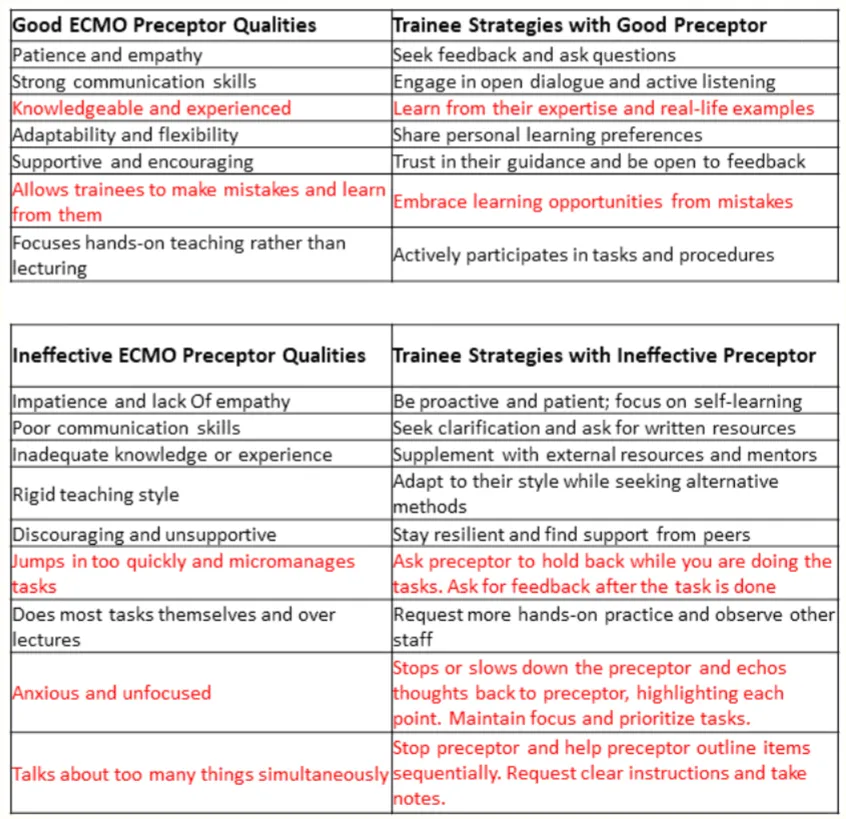
The burden should not just be on the preceptor or department. Trainees must be flexible and tolerant and keep their supervisors informed about their progress and challenges. Clear communication helps tailor the training to the trainee’s needs. Key points and essential aspects have been highlighted in red font for easier identification and to emphasize their significance in maximizing learning and preceptor-trainee strategies in the ECMO department.
Summary:
I have been very fortunate to start my ECMO career at a phenomenal teaching institution, reflected in the dedication of the preceptors, staff, and physicians. Our department emphasizes continuous education, with monthly simulation labs, MM meetings, and constant updates on new techniques and protocols. The encouraging mantra from our department head is, “We want to set you up for success.” The tagline is, “How can we help?” This attitude is highly motivating, especially for newcomers to the field of ECMO.
This article outlines strategies for maximizing learning in ECMO departments through effective preceptor-trainee interactions, diverse learning methods, and identifying and avoiding unproductive preceptor behaviors. Essential qualities of good preceptors include patience, empathy, adaptability, and a focus on hands-on teaching, supported by proactive trainee strategies.
Please leave a comment if you have something to add, and hit the Subscribe button below to receive notifications of new posts.
Note: This article reflects my learning journey in ECMO and is intended for educational purposes only. It should not be used as a substitute for professional medical advice or guidance. Always consult with qualified healthcare professionals for clinical decisions and patient care.
References:
1. Extracorporeal Life Support Organization (ELSO). (2017). ELSO Guidelines for Training and Continuing Education of ECMO Specialists. Retrieved from https://www.elso.org/Resources/Guidelines.aspx
2. Smith, J. K., Brown, L. M., & Johnson, T. R. (2015). The role of preceptor consistency in clinical education for healthcare professionals. Journal of Clinical Education in Healthcare, 7(3), 123-130
Share and Subscribe. Join the ECMO 143 Learning Journey
Other Links:
Follow me on LinkedIn: Jonathan B. Jung, RRT-NPS
Follow me on X (Twitter) “ECMO 143-Stay Uptodate” List on X
Acknowledgments:
I developed three custom GPTs, “AI ECMO Expert,” “ECMO Specialist Handover Practice,” and “Micro Definitions (MD-GPT),” for specialized research. These tools draw primarily from the ELSO Redbook (6th Edition), the ELSO Specialist Training Manual (4th Edition), various research papers, and articles. Additional research was supported by GPT-4o/o1, Claude 3.5 Sonnet/Opus, and Perplexity. Editing was performed with Grammarly. A.I. images and charts were created using Leonardo AI, DALL-E3 AI Image Generator, Microsoft Designer, and Adobe Express. Content for all articles sourced from Extracorporeal Life Support: The ELSO Red Book, 6th Edition, and ECMO Specialist Training Manual, 4th Edition.