Shunt Fraction in VV ECMO (Short and Sweet)
Understanding Shunt Fraction
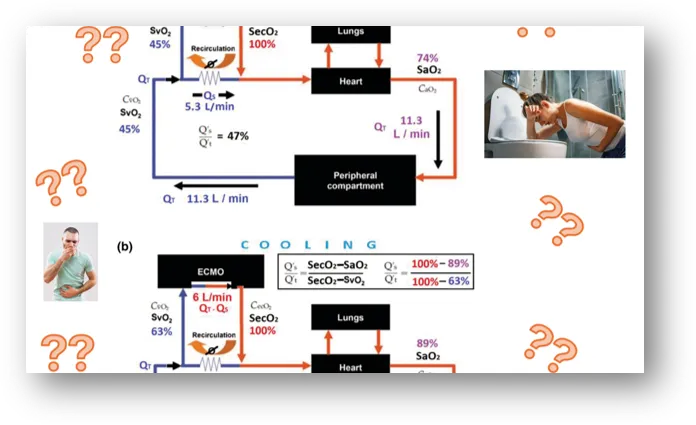
In the context of VV ECMO, the shunt fraction refers to the portion of blood that bypasses the ECMO circuit and returns to the systemic circulation without being oxygenated. This measures how much of the cardiac output is not being treated by the ECMO circuit, which can affect overall oxygen delivery and carbon dioxide removal. Think of it like going to a fancy buffet but only eating the breadsticks—you’re missing out on the main course.
Components of Shunt Fraction
-
Cardiac Output (CO): The total volume of blood the heart pumps per minute.
-
ECMO Flow: The volume of blood flowing through the ECMO circuit per minute.
The shunt equation is: Qs/Qt or to calculate it: (CardiacOutput - ECMOFlow) / CardiacOutput
No more math.
And? What does this mean?
-
High Shunt Fraction: Indicates that a significant portion of blood is bypassing the ECMO, which may result in inadequate oxygenation and CO2 removal. This could be due to insufficient ECMO flow relative to the cardiac output or other physiological factors. It’s like having a high-speed internet connection but all your apps are run slow—frustrating and inefficient.
-
Low Shunt Fraction: Indicates that most of the blood is being treated by the ECMO, suggesting effective oxygenation and CO2 removal. However, extremely low shunt fractions may imply over-reliance on ECMO support. Too much of a good thing (if ECMO is considered good)
What can change the patient’s Shunt Fraction?
-
Cannula Positioning: Proper positioning ensures optimal blood flow through the ECMO circuit and minimizes shunting.
-
ECMO Flow Rate: Adjusting the flow rate can help balance the shunt fraction. Increasing ECMO flow can reduce the shunt fraction, while decreasing it can increase the shunt fraction. It’s like adjusting the volume on your favorite song—finding the right balance is key.
-
Patient Hemodynamics: Changes in cardiac output and venous return can affect the shunt fraction. For instance, increased cardiac output without a corresponding increase in ECMO flow can raise the shunt fraction.
-
Physiological Conditions: Conditions such as pulmonary hypertension or heart failure can influence the shunt fraction by affecting overall hemodynamics and venous return patterns.
Keep an Eye on Shunt Fraction
-
Regular Assessments: Monitor cardiac output and ECMO flow regularly to calculate and assess the shunt fraction.
-
Adjusting ECMO Parameters: Fine-tune ECMO flow rates to manage the shunt fraction and ensure optimal oxygen delivery and CO2 removal.
-
Optimizing Cannula Position: Use imaging techniques to ensure that cannulas are correctly positioned to maximize ECMO efficiency and minimize shunting.
-
Hemodynamic Management: Maintain stable hemodynamic conditions to support effective ECMO function and minimize shunt fraction variations.
To Sum it up
Understanding and managing the shunt fraction is crucial for optimizing VV ECMO therapy. It helps ECMO specialists ensure that the balance between cardiac output and ECMO flow is maintained, providing effective oxygenation and CO2 removal while supporting the patient’s overall hemodynamic stability. So, next time you’re calculating shunt fractions, remember: it might feel like trying to solve a Rubik’s cube in the dark, but it’s essential for keeping everything in sync.
Please leave a comment and hit the Subscribe button below to receive notifications of new posts.
References:
-
Extracorporeal Life Support: The ELSO Red Book, 6th Edition. Published by the Extracorporeal Life Support Organization (ELSO), this comprehensive text is a key resource for understanding the principles and practices of ECMO.
-
ECMO Specialist Training Manual, 4th Edition. This manual provides in-depth training protocols and guidelines for ECMO specialists, covering cannulation techniques, patient management, and emergency procedures.
-
Various Other Source Materials. Additional insights and guidelines on ECMO practice, including hospital patient care practices.
Note: This article reflects my learning journey in ECMO and is intended for educational purposes only. It should not be used as a substitute for professional medical advice or guidance. Always consult with qualified healthcare professionals for clinical decisions and patient care.
Share and Subscribe. Join the ECMO 143 Learning Journey:
Follow me on LinkedIn: Jonathan B. Jung, RRT-NPS
Follow me on X (Twitter) “ECMO 143-Stay Uptodate” List on X
Acknowledgments:
I developed three custom GPTs, “AI ECMO Expert,” “ECMO Specialist Handover Practice,” and “Micro Definitions (MD-GPT),” for specialized research. These tools draw primarily from the ELSO Redbook (6th Edition), the ELSO Specialist Training Manual (4th Edition), various research papers, and articles. Additional research was supported by GPT-4o/o1, Claude 3.5 Sonnet/Opus, and Perplexity. Editing was performed with Grammarly. A.I. images and charts were created using Leonardo AI, DALL-E3 AI Image Generator, Microsoft Designer, and Adobe Express. Content for all articles sourced from Extracorporeal Life Support: The ELSO Red Book, 6th Edition, and ECMO Specialist Training Manual, 4th Edition.